When Inequity Delays Elimination: Lessons from River Blindness in Northern Cameroon
By Lucrèce Eteki, GLIDE Fellow
By Lucrèce Eteki, GLIDE Fellow
An Iconic Disease — and an Unfinished Agenda
River blindness control is one of the oldest and most emblematic neglected tropical disease programs in Africa. From pioneering large-scale vector control on the continent to the development of community-directed treatment with ivermectin (CDTI), this disease helped define what community-based public health could achieve. Onchocerciasis demonstrated that communities themselves could safely and effectively distribute life-saving treatment, becoming a powerful symbol of locally driven progress.
Importantly, this history also highlighted the critical role of women in disease control. CDTI involving women in the distribution of ivermectin have proven to be more effective and successful strategies in combating onchocerciasis in sub-Saharan Africa since 2010.
In Cameroon, annual ivermectin campaigns have been implemented for nearly twenty years. A study conducted in Mokolo—an isolated endemic health district in the Far North region affected by humanitarian crisis—showed strong CDTI coverage data. Our research documented an overall uptake of 79 percent among the 75 participants surveyed, aligning with district reports indicating an average coverage of approximately 80 percent.
Yet transmission persists. In communities surrounding the Mokolo dam, prevalence has been documented at 34 percent, confirming active transmission despite two decades of treatment.
The question is no longer whether ivermectin works. The question is whether it reaches everyone.
When High Coverage Conceals Inequity
When we disaggregated our data, the reassuring average revealed clear disparities between communities.
Among host communities in Mokolo, ivermectin uptake reached 94 percent. Among internally displaced persons (IDPs) living in a nearby camp, uptake was only 67 percent. Displaced persons were approximately seven times less likely to have received treatment compared to hosts.
The overall average masked a structural divide.
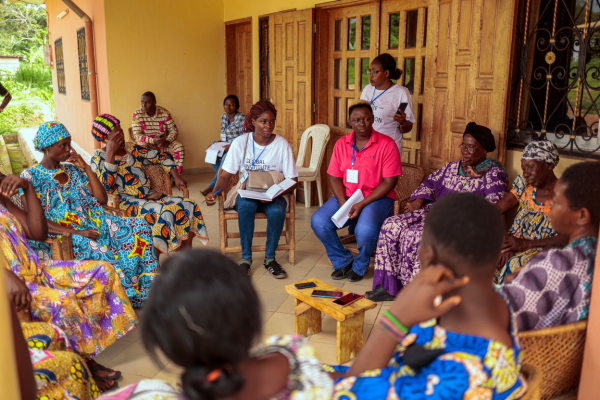
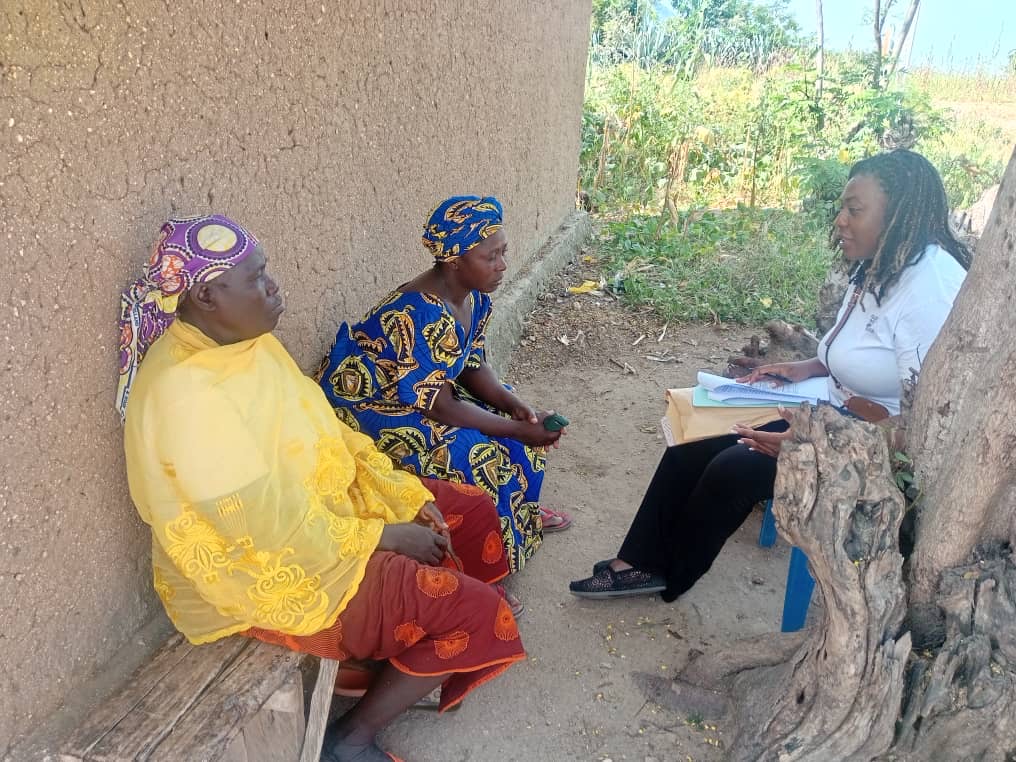
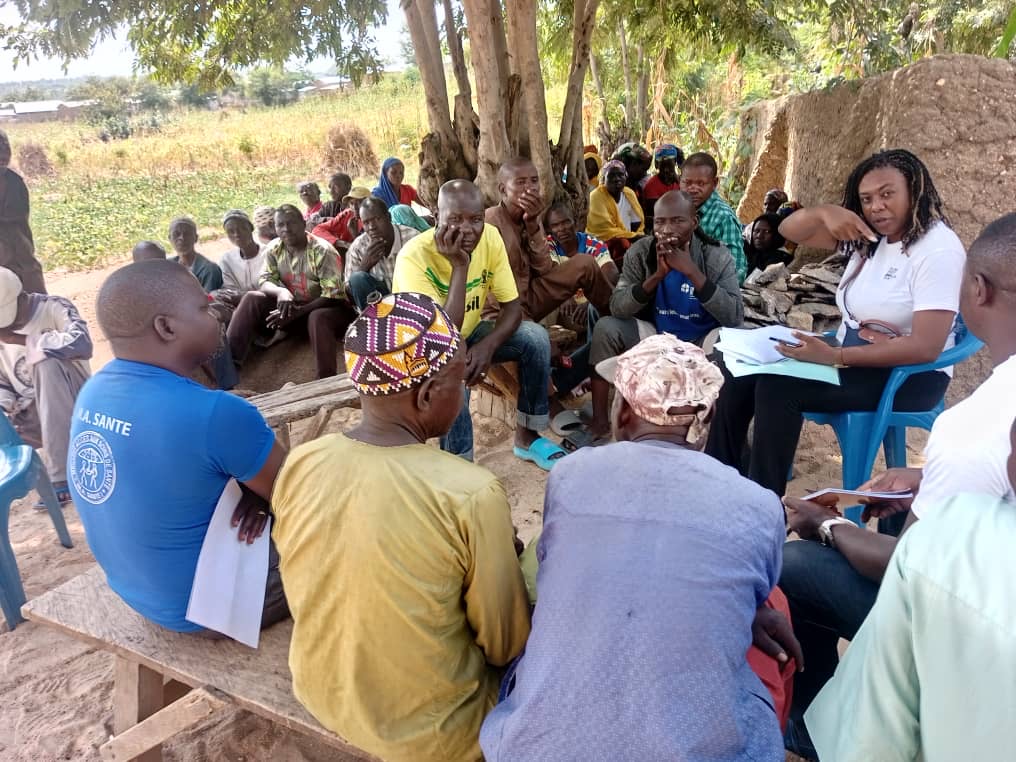
To understand why coverage among IDPs remained significantly lower, we conducted focus group discussions with community members. These discussions revealed two structural dynamics within the displacement setting: IDPs are not meaningfully integrated into the planning and delivery of mass drug administration campaigns, and within the IDP community itself, women are largely excluded from decision-making spaces and key community activities. In other words, those most vulnerable to the disease are not participating in the design or delivery of the intervention intended to eliminate it. A typical inequity and global health problem.
Onchocerciasis elimination is uniquely sensitive to such gaps. Adult worms can survive for more than a decade in the human body. Ivermectin must be taken annually and consistently over many years to interrupt transmission. Even a relatively small untreated group can sustain infection across an entire district.
In this context, inequity is not peripheral—it is epidemiologically consequential.
To understand why, it is essential to examine how river blindness is controlled.
A Model That Depends on Trust
The cornerstone of onchocerciasis control is community-directed treatment with ivermectin. CDTI relies on community drug distributors (CDDs) selected locally to distribute tablets once a year. The success of this approach depends not only on drug efficacy but on social capital.
In host villages in Mokolo, CDDs are embedded in community life. They are farmers, neighbors, relatives—individuals known and trusted. However, in the displacement camp of Ouro Tada, that model was not fully replicated. None of the CDDs came from within the displaced population. Instead, distributors come from surrounding host communities to administer the drugs.
One IDP woman described the situation plainly:
“There are no CDDs among us. They only come from outside to give us the drugs.”
In stable communities, CDTI works precisely because it is community-directed. In displacement settings, where social networks are fractured, trust becomes even more critical. When communities are not involved in delivering interventions—when they are treated as recipients rather than participants—trust erodes.
Our study found that trust in health workers was the strongest predictor of ivermectin uptake. Eighty-five percent of respondents who expressed confidence in health staff received ivermectin, compared to 53 percent among those who did not trust them. Where trust was weak, uptake declined sharply.
Rumors and the Cost of Exclusion
In host communities, two decades of repeated campaigns had normalized ivermectin. In displacement settings, that normalization had not yet taken hold. Many IDPs were less familiar with the disease, and questions about side effects or intent were more difficult to address. The absence of locally selected CDDs meant the absence of trusted intermediaries capable of countering misinformation.
Elimination in humanitarian settings therefore requires more than logistical adaptation. It requires rebuilding trust where it has been fractured.
However, inequity in Mokolo was not limited to displacement.

The Gendered Dimension of Exclusion
Women and girls are disproportionately affected by Neglected Tropical Diseases (NTDs) due to social, cultural, and economic factors. Not only are women more exposed through their assigned gender roles and responsibilities such as care taking, fetching water, farming…in contaminated environments, but they are also less likely to get proper treatment due to financial, time, and autonomy constraints. Furthermore, women suffer more from social consequences of NTDs, such as stigmatization, discrimination, or abandonment.
In our study, focus groups in host communities were conducted with men and women together. Women were vocal, and some held leadership positions. They actively contributed to discussions on health campaigns and community decisions.
However in the displacement camp, the dynamic was markedly different. During mixed focus groups, women remained largely silent and deferred to male participants. Yet when engaged separately, their perspectives emerged clearly. They expressed frustration at not being consulted in community decisions and described exclusion from leadership spaces. Despite managing health within their households, they were not meaningfully integrated into campaign planning.
This exclusion is not merely symbolic—it affects performance.
Community-directed treatment programs across sub-Saharan Africa have demonstrated that involving women in ivermectin distribution strengthens compliance and improves reporting quality. Since 2010, evidence has increasingly shown that when women serve as community drug distributors, campaigns become more consistent and trusted.
District officials in Mokolo echoed this reality. The head of the district health bureau stated:
“We prefer working with women. When they report their coverage data, we know it is true… but their husbands won’t allow them because it does not pay and it takes them away from family duties.”
In the displacement camp, structural barriers constrained women’s participation even further. Conservative norms were stronger. Domestic responsibilities limited mobility. Decision-making structures remained male-dominated.
The result was layered exclusion: displaced communities were not fully integrated into distribution systems, and women within those communities were not meaningfully included in leadership roles.
Toward Inclusive Elimination
If onchocerciasis taught the world that communities can effectively participate in disease control, its final chapter must reaffirm that principle in humanitarian settings.
Elimination strategies must move beyond coverage averages and address who remains structurally under-reached. Displaced populations should not only receive treatment but participate in delivering it—through the recruitment and training of CDDs from within IDP communities. Women—who bear a disproportionate burden of NTDs and have demonstrated effectiveness as community health actors—must be meaningfully integrated into decision-making and distribution systems. Trust must be rebuilt where displacement has fractured social cohesion.
In a disease where even small untreated pockets can sustain transmission, equity is not an ethical add-on—it is an epidemiological necessity. Gender-responsive and community-centered approaches are not symbolic gestures for International Women’s Day; they are operational strategies for achieving elimination.

Lucrèce Eteki is a highly skilled and accomplished public health professional with a focus on global environmental health and humanitarian aid. She holds a Master’s degree in Public Health from The George Washington University and a Master in Humanitarian Aid and International Cooperation from Kalu Institute, Spain. Lucrece has extensive experience working with various international organizations, including the World Health Organization (WHO) and Médecins Sans Frontières (MSF). Throughout her career, Lucrece has demonstrated expertise in epidemiology, emergency response, and project coordination. She has played a pivotal role in responding to cholera and COVID-19 outbreaks in Cameroon, providing technical support to the Ministry of Health and coordinating response activities. Her work has involved strengthening community-based surveillance, improving case management, and implementing vaccination campaigns. Lucrece’s dedication to public health extends to gender-based violence prevention and promoting resilience in emergency settings. She has contributed to the development of national plans and training modules, ensuring that health interventions are inclusive and effective.