Research based mosquito control in the fight against Buruli ulcer in Australia
Dr. Véronique Paris, Research Fellow, Medical Entomology and Vector Population Control, Pest and Environmental Adaptation Research Group School of BioSciences, Faculty of Science, University of Melbourne
Understanding how infectious diseases spread is central to prevention and control, especially when they are carried by vectors.
A vector is an organism that transfers a disease-causing agent from the environment or an infected host to a non-infected one. Vector-borne diseases pose a unique challenge: pinpointing the exact vector species and confirming its role in transmission often requires years of targeted, sophisticated research.
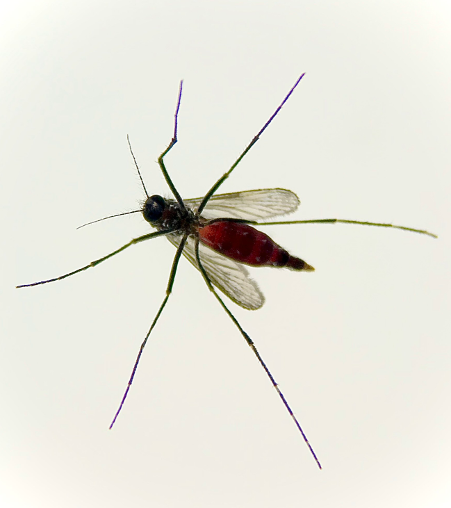
Mosquito with blood meal. Pictured is Aedes notoscriptus (The Australian backyard mosquito). Picture: Véronique Paris
This disease typically begins as a painless lump under the skin, but if untreated it can progress into large ulcers that destroy skin and soft tissue, leaving people with long-term disability. Cases have been rising sharply in recent years, from 135 in 2020 to 344 in 2024.
Additionally, new outbreaks have appeared in areas previously thought to be disease-free. Yet for a very long time, the pathway of transmission remained a mystery.
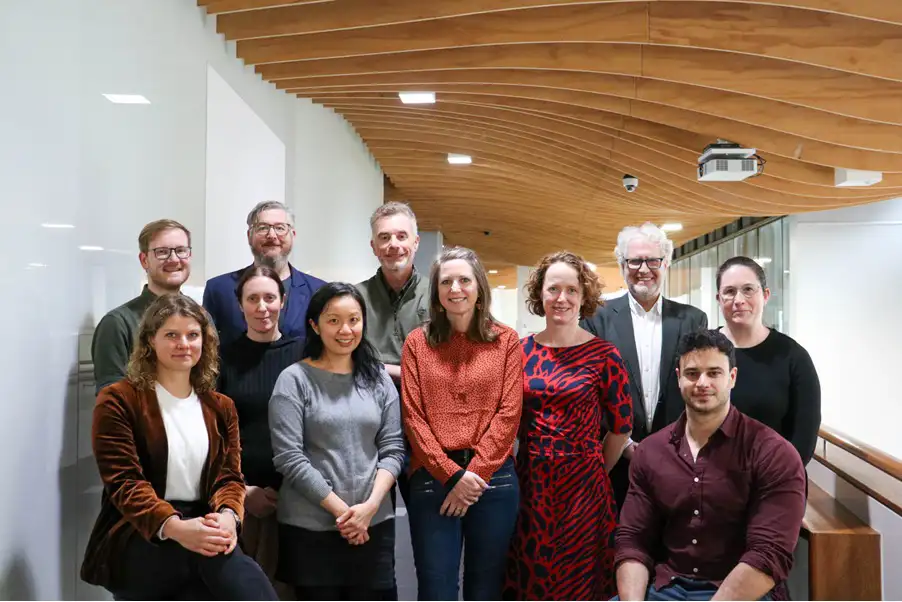
Part of the Beating Buruli in Victoria team. Back row: Dr Peter Mee, Nicholas Bell, Prof Tim Stinear, Prof Paul Johnson and Jessica Porter. Front row: Dr Véronique Paris, Dr Kim Blasdell, Dr Ee Laine Tay, Dr Emma Hobbs, Dr Katherine Gibney and Dr Andrew Buultjens. Not pictured: Prof Ary Hoffmann, Dr Sara Windecker, Caroline Lavender, Maria Globan, Prof Nick Golding, Prof John Wallace, Dr Arvind Yerramilli, Dr Koen Vandelannoote and Dr Stacey Lynch-Allen. Picture: Rahul Ratwatte/Doherty Institute
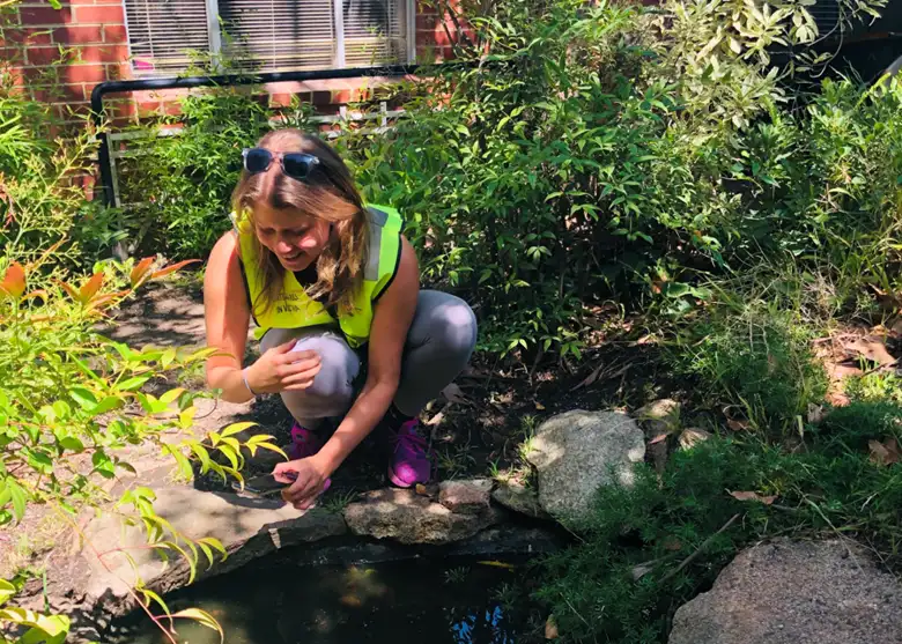
Dr Véronique Paris identifying mosquito breeding sites in Melbourne’s suburbs. Picture: Alys Young
A population genomic study revealed that this species moves about ten times further than the yellow fever mosquito (Aedes aegypti), making localised mosquito control especially challenging.
Researchers also found that Ae. notoscriptus is highly effective at exploiting cryptic breeding sites, areas around houses that can hold small amounts of water but are not immediately obvious and therefore difficult to manage through traditional source reduction measures alone. Examples include clogged gutters, plant saucers, unmaintained water tanks, trailers, and swimming pools.
Harnessing Mosquito Behaviour for Control
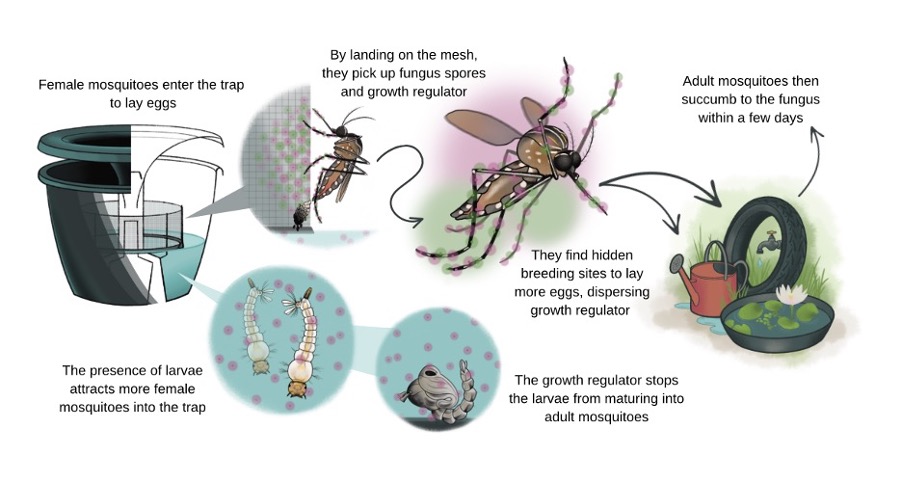
To address these challenges, the trial deployed a new mosquito control system designed to work with the mosquitoes’ natural behaviour to suppress populations even in hidden breeding sites.
Each station uses two active ingredients: a mosquito-specific growth regulator, which prevents larvae from developing into biting adults, and a naturally occurring fungus (Beauveria bassiana), which reduces mosquito biting and ultimately kills adult mosquitoes after a few days.
The mosquito control stations explained. Picture: Marianne Coquilleau
When a female mosquito enters the control station to lay her eggs, she picks up both agents. As she continues to search for other breeding sites, she spreads the growth regulator, disrupting mosquito development beyond the stations themselves. This “self-dissemination” effect makes the system particularly powerful, reaching sites that are otherwise impossible for humans to treat.
Early Outcomes
The results so far are promising. Mosquito numbers were effectively reduced in areas with stations, and early findings suggest that people living in controlled areas were at lower risk of infection compared to those in untreated areas.
These findings are currently undergoing peer review. While it is too early to draw final conclusions, the approach looks very promising.
This represents one of the first community-wide interventions against Buruli ulcer transmission in a temperate, urban setting, and we hope that the findings and conclusions drawn here in Australia can help guide research and control efforts in other parts of the world where Buruli ulcer remains a challenge.
Next Steps
While reducing mosquito populations is a critical goal, the Beating Buruli in Victoria team also studies how mosquitoes interact with pathogens and is currently exploring questions such as: where and how mosquitoes acquire M. ulcerans, whether they pick it up directly from wildlife, humans, or the environment, and what role breeding, feeding, and mating sites play in transmission.
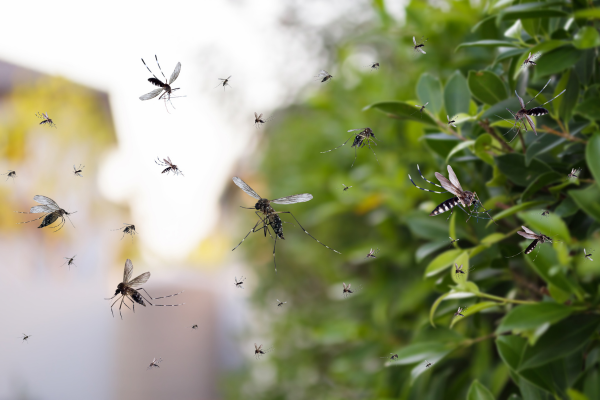
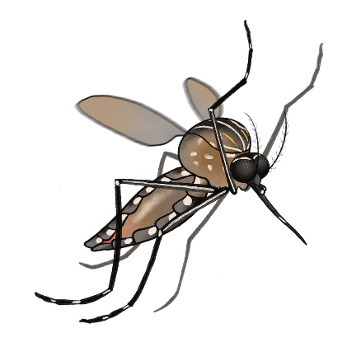
The Australian backyard mosquito in flight. Illustration: Marianne Coquilleau
Answering these questions is key to breaking the transmission cycle and designing smarter, long-term strategies to protect public health.
The Eureka Prizes are among Australia’s most prestigious science awards, celebrating excellence in research and innovation. Being named a finalist recognises the team’s significant contribution to understanding and controlling Buruli ulcer and mosquito-borne disease.
It is a powerful example of how collaborative science can tackle urgent, real-world health problems. By combining ecological research, genetics, and innovative interventions, this team is helping to protect communities not just in Victoria but also providing insights valuable to mosquito-borne disease control worldwide. This work also highlights the importance of understanding the specific biology and behaviour of vectors. Mosquitoes are not all the same, and effective control depends on recognising those differences.
Dr. Véronique Paris
Dr. Véronique Paris is a Medical Entomologist working in the Pest & Environmental Adaptation Research Group at the University of Melbourne, Australia. She is mainly focused on researching local Australian vector mosquitoes by using advanced genomics as well as hands on experiments in the field and the laboratory with the goal of reducing disease transmission.
Dr. Véronique Paris is a Medical Entomologist working in the Pest & Environmental Adaptation Research Group at the University of Melbourne, Australia. She is mainly focused on researching local Australian vector mosquitoes by using advanced genomics as well as hands on experiments in the field and the laboratory with the goal of reducing disease transmission.