Learning Through Others: Supporting and Observing DEEC 2025
Mahanna Elsheik, Program Associate, GLIDE
Mahanna Elsheik, Program Associate, GLIDE
In any new role, there’s always an adjustment period; it’s a time to get familiar with the priorities and find your place within a team. For me, that adjustment came shortly after completing my Master of Science in Public Health, when I joined GLIDE as a Program Associate in March 2025 and immediately began supporting our Disease Elimination Eradication Course (DEEC). We were only a couple of months away from course launch, which meant there was a steep learning curve and a lot to catch up on. But as I worked across the different course components, I quickly came to appreciate just how valuable the course truly is.
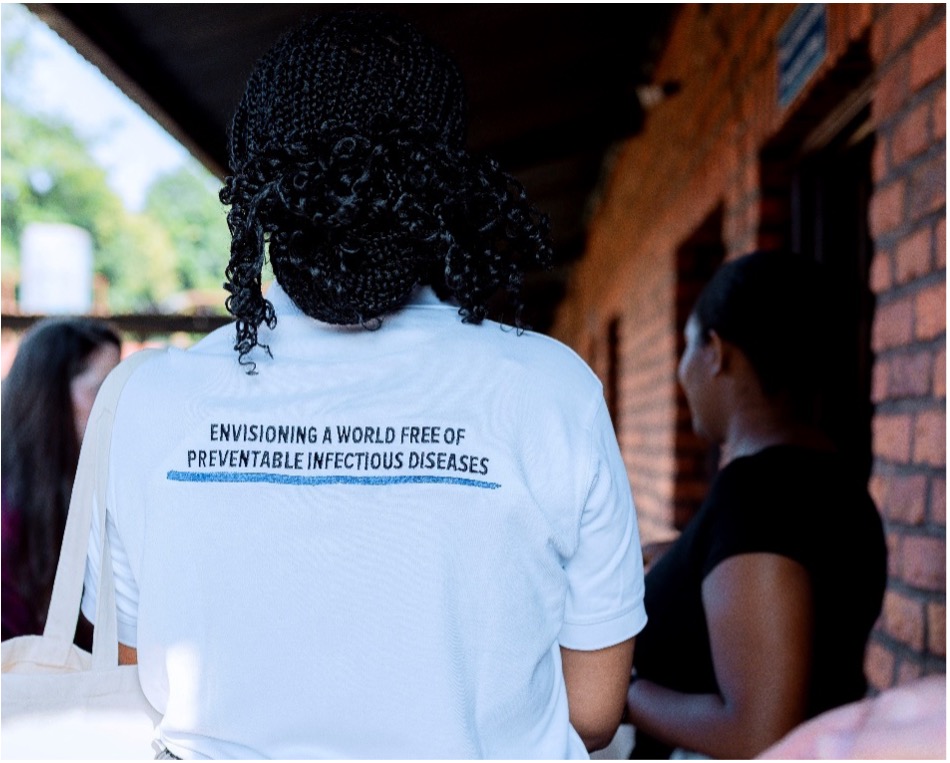
GLIDE works across three strategic pillars to advance its mission towards global disease elimination: operational research, advocacy, and capacity strengthening. As part of GLIDE’s capacity strengthening, the DEEC aims to enhance course participants’ understanding of the core principles of disease elimination and eradication and to equip them with the skills to co-develop effective and context-appropriate strategies to combat eliminable diseases.
One of the things that stood out to me early on was how intentionally the DEEC was designed. Being involved across the different activities gave me the chance to experience the “adaptive learning approach”—not just in terms of what is being taught, but how it’s being delivered. I started to better understand which parts of the course need to evolve with each iteration to stay timely and relevant and which core elements need to remain constant. As the global health landscape evolves, so do the needs of the course participants, and what capacity strengthening actually looks like will naturally shift too. So it’s important that flexibility and adaptability, in course content and structure, is built in from the start to address emerging needs.
The DEEC was originally hosted in partnership with NYU in Abu Dhabi (2022 & 2023). In 2024, GLIDE launched an updated DEEC with co-financing and collaboration from The Carter Center, and two iterations hosted in partnership with the Noguchi Memorial Institute for Medical Research (NMIMR) in Ghana and the University of Global Health Equity (UGHE) in Kigali, Rwanda, reflecting a strong commitment to increasing course accessibility. This year, in 2025, GLIDE partnered again with UGHE to hold the fifth iteration of the course at UGHE’s Butaro Campus.
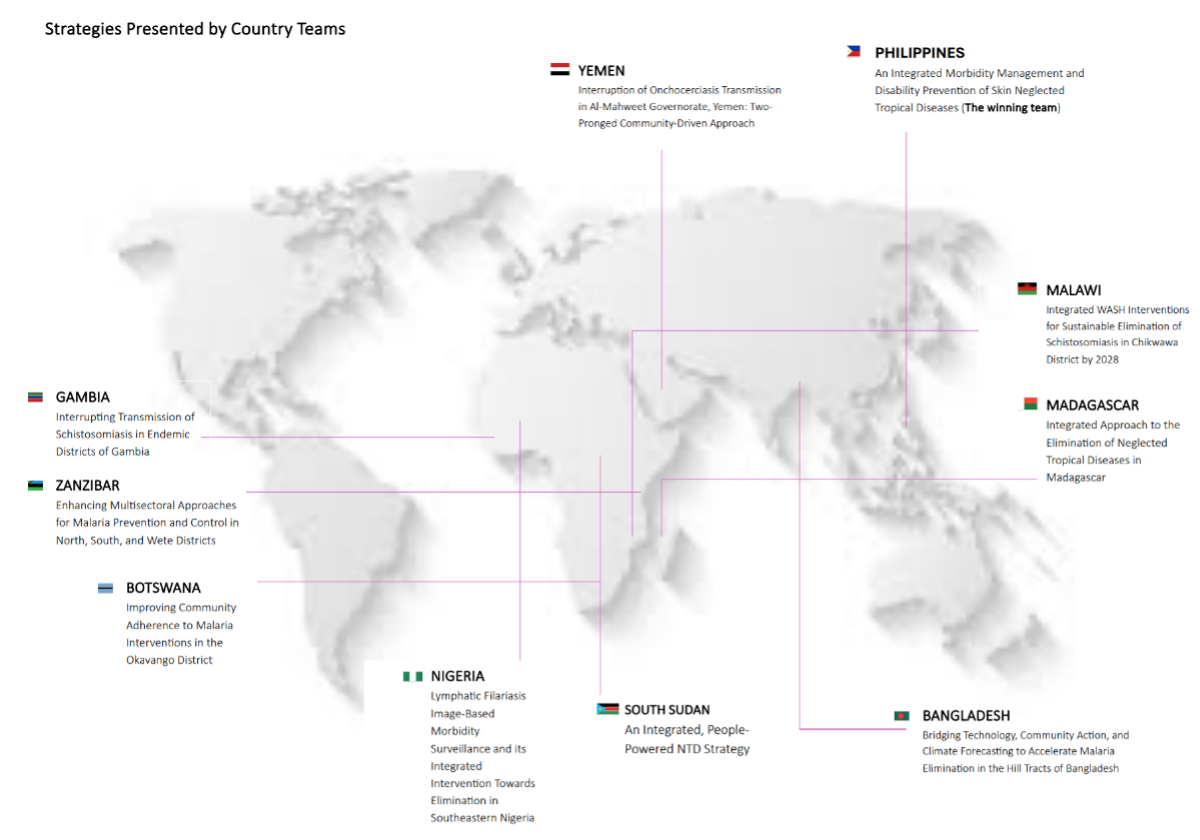
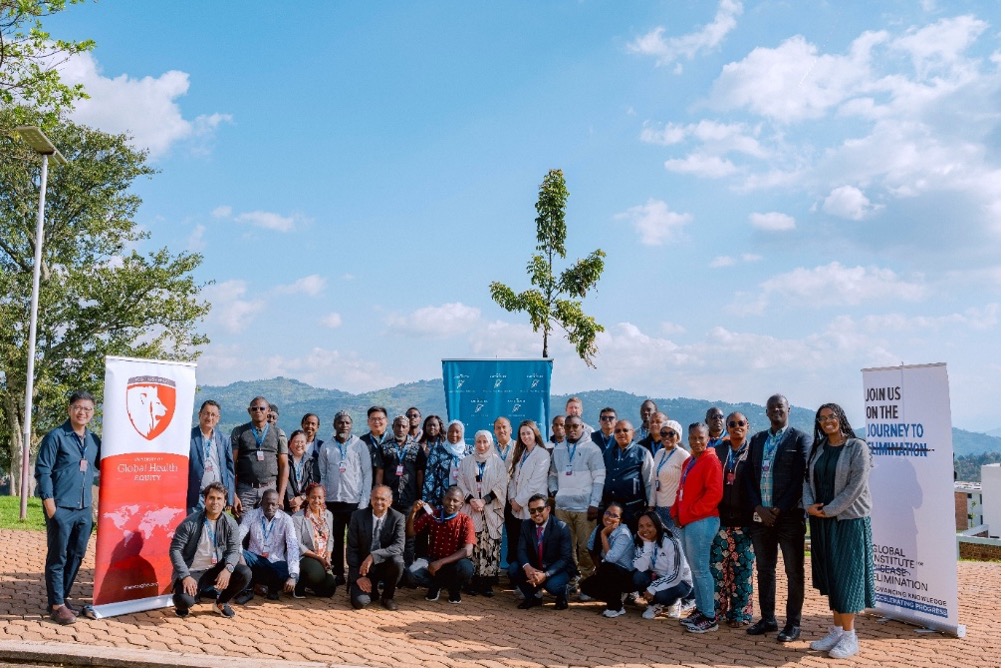
This year’s course brought together 29 participants from 10 countries: Yemen, Philippines, Bangladesh, Nigeria, Botswana, Zanzibar, Madagascar, Gambia, Malawi, and South Sudan.
Disease elimination isn’t about individuals working in silos; it needs country-led, coordinated efforts that align with national priorities, not external agendas. Each DEEC country team is made up of individuals working within government, academia, or implementing agencies in their respective countries. Bringing along country teams to participate in the course and develop their strategies together recreates the in-country coordination and collaboration needed for effective implementation of disease elimination strategies.
The DEEC began with a 1-month online portion, which gave me a first glimpse into the country team dynamics and how they were starting to think through their disease elimination strategies. I moderated one of the breakout sessions and it was interesting to watch the teams build their logic models, identify the barriers and facilitators to their interventions and map out what success would look like for their strategy. Even over Zoom, you could tell their strategic thinking was starting to take shape, and I was really looking forward to seeing how their ideas would evolve during the in-person portion.
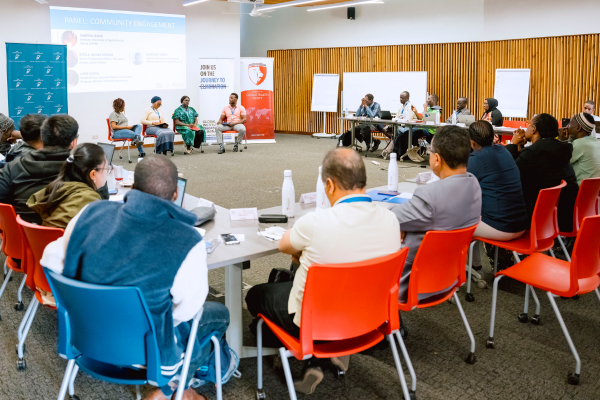
When the cohort finally joined in a classroom at UGHE’s Butaro campus, the energy shift from online to in-person was evident. There was a burst of energy and strong positive engagement within country teams and between participants and facilitators. A highlight of mine was also finally meeting our UGHE partners in person after months of remote coordination. Just like with the DEEC participants, working together in the same room brought a new energy and depth to our partnership. The setting itself, on a campus built on the vision of the late global health visionary Dr. Paul Farmer, most definitely added a sense of purpose.
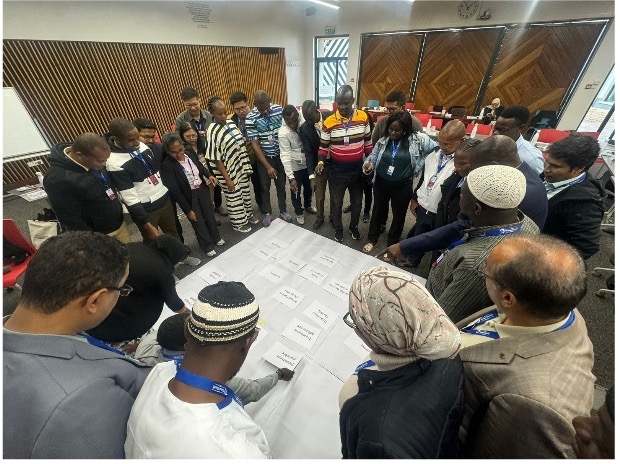
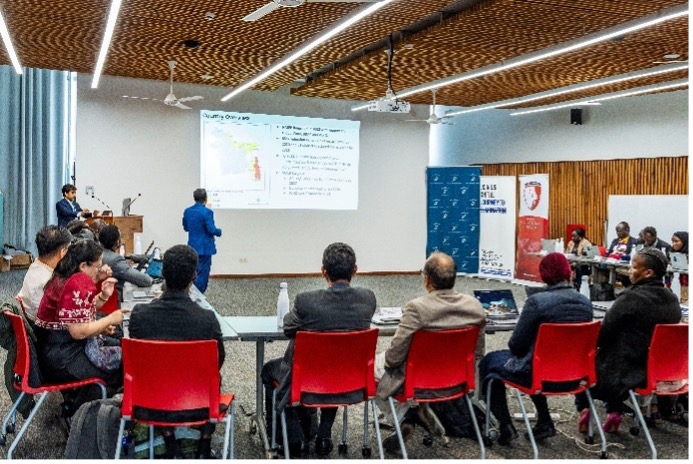
Without a doubt, one of the highlights of the in-person portion was the field site visits. The cohort was split into groups and each group visited a different health center around Butaro with some groups traveling more than 3 hours to reach their site. While each center focused on a specific health topic, we all had the opportunity to learn about the Rwandan community health system and meet with experienced community health workers (CHWs). Listening directly from the CHWs, understanding their motivations, challenges, and getting a glimpse into their daily work was a formative experience. Our CHW shared how the trust she had built over time within her community made this role deeply meaningful to her. She also mentioned how the training and knowledge she receives allows her to better support her community. Hearing her speak was a powerful reminder of just how much CHWs take on and how those closest to the community are the ones best positioned to understand its needs. Several participants also echoed this sentiment sharing that the site visits help them realize the importance of re-engaging with their CHWs and finding better ways to support their role in disease elimination efforts.
Many of the participants were eager to bring what they learned back home, not just from the field visits but also from other sessions like systems thinking, behavioral theories, human-centered design, health system strengthening, and community engagement—recognizing that elimination is not just about technical strategies but also about the people, systems, and trust-building. That kind of learning was also largely made possible thanks to the dedication of the experienced DEEC facilitators. Several of them have been involved since the beginning of DEEC and have continuously helped shape a learning environment that encourages engagement, values different perspectives, and offers real-world, country-specific examples that teams could relate to.
At the end of the week, each team presented its final strategies to a panel of expert judges. The top three strategies were:
As the first-place winner, Team Philippines received seed funding to catalyze their efforts towards the development of their strategy. While this DEEC iteration produced 10 strong strategies with a dash of competitive spirit, what mattered most was the collaborative spirit and peer learning. All country team strategies were also encouraged to be further developed and pursued as participants return to their home countries, with the hope of driving real-world impact beyond the DEEC.
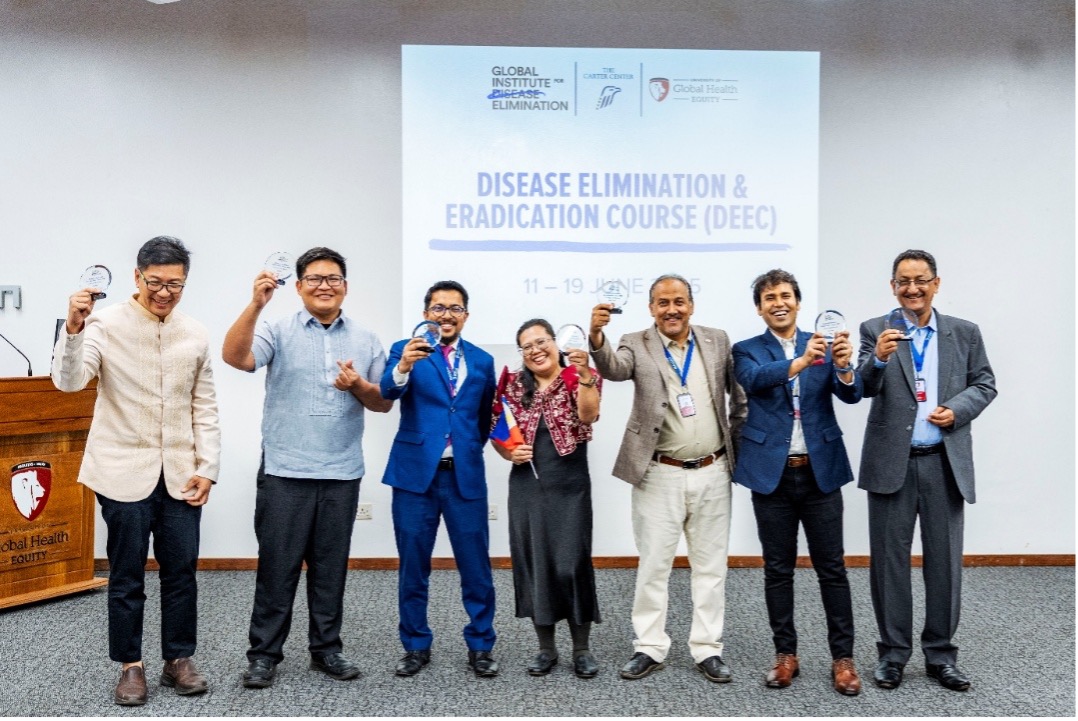
Throughout the course, seeing country teams challenge and debate one another, actively listen and validate each other’s experiences, only reaffirmed the need for deep engagement and shared learning in advancing disease elimination. They often shared stories and lessons learned from their countries, sparking rich discussions and exchanges throughout the course. One of my favorite moments from the in-person portion, was seeing a team take the initiative to share their own success story after being inspired by other presentations the day before. It’s that kind of cross-country learning and drive to contribute, whether through formal presentations, panel sessions, or group activities, that makes DEEC so special. And it wasn’t all serious either—participants were also keen on having a good time. We had fun icebreakers and energizers with dancing, the Atama clap and even games to help us get to know each other better. There was also a group trip to Kigali, birthday celebrations and even a barbeque organized by UGHE on the last day of the course. All of this made the experience that much more fun and memorable .
I also ended up learning a lot more than I expected. While the DEEC focuses broadly on disease elimination, there’s naturally a strong emphasis on NTDs since many of the diseases with elimination targets fall into that category. Before joining GLIDE, I hadn’t worked directly with NTDs, so attending the sessions gave me a chance to revisit familiar concepts and apply them in a different context. The sessions were also delivered in a dynamic and grounded way which really helped the learning stick.
One concept that stood out in particular was Systems Thinking. I learned how important it is to take a systems thinking approach to identify key leverage points that affect the effectiveness and sustainability of NTD interventions. DEEC makes this a core part of the learning across both the online and in-person sessions and it clearly resonates with the participants. With every iteration, its consistently rated as one of the top sessions and it was definitely one of my favorites too.
The DEEC pushed me to think more deeply about program design, communication, and impact through an elimination lens. It was a solid introduction to GLIDE’s focus areas, and since then I’ve even noticed a shift in how I understand and engage in conversations about disease elimination & eradication ever since.
With the delivery of DEEC UGHE 2025 now complete, it’s also just the beginning. With each iteration, the course contributes to a growing network of now over 160 alumni and public health professionals—people already doing important work, who now have deeper connections and more opportunities to learn from one another. Whether it’s continued WhatsApp chats, future collaborations or just staying on each other’s radar, the relationships built will last well beyond the course itself. I feel very fortunate to have been a part of it and I’m excited to see what’s next as we prepare for the next iteration. The DEEC will continue to grow and evolve, but its foundation of country ownership, systems thinking, and shared learning will remain firm.
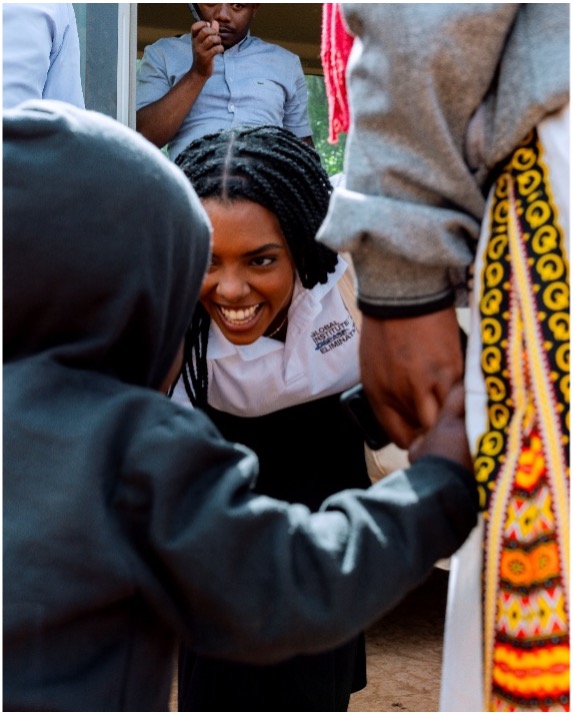

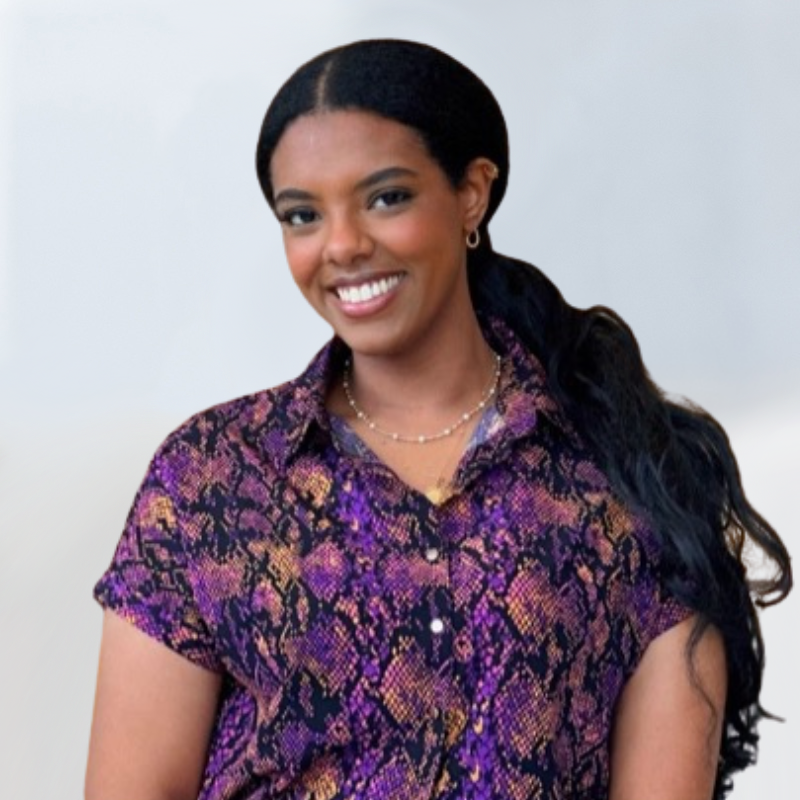
Mahanna Elsheik is a public health professional with a strong background in infectious disease epidemiology, vaccine science and policy, and program evaluation. She holds an MSPH in Global Disease Epidemiology and Control from the Johns Hopkins Bloomberg School of Public Health.
Her work spans research, project coordination, and implementation across diverse public health settings, including with Gavi, the Uganda Tuberculosis Implementation Research Consortium (UTIRC), AUB, and UAEU. At Gavi and UTIRC, she focused on marginalized populations, addressing immunization barriers for zero-dose children and improving tuberculosis management in rural, low-resource settings. In the UAE, she co-authored publications evaluating readiness for personalized medicine integration, supporting policy efforts tied to the Emirati Genome Project.
Mahanna’s contributions have informed initiatives in disease surveillance, health system resilience, and research ethics. As a Program Associate at GLIDE, she supports technical coordination, logistics, and monitoring and evaluation, driven by a commitment to data-driven, equity-centered approaches for strengthening health systems and accelerating disease elimination.