GLIDE Statement – World NTD Day 2026
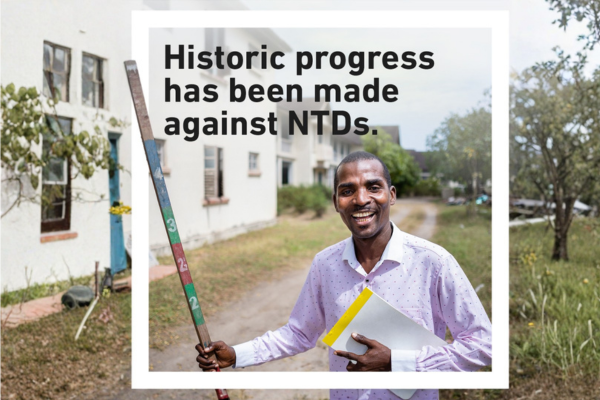
30 January 2026 (Abu Dhabi, UAE) – On World Neglected Tropical Diseases Day 2026, we mark both remarkable progress and a defining moment for global efforts to end neglected tropical diseases (NTDs). Over the past decade, countries have demonstrated that elimination is possible. Millions of people are no longer at risk, and many nations have eliminated at least one NTD. These achievements are the result of sustained political leadership, strong partnerships, and the dedication of communities and frontline health workers worldwide.
Yet even as we see progress, the nature of the challenge is changing. Elimination does not end with validation from the World Health Organization. Recrudescence risks, climate change, fragile surveillance systems, and funding constraints threaten hard-won gains—particularly in near- and post-elimination settings. The final miles, and the years that follow are always challenging, require different tools, stronger integration, and long-term commitment.
At the Global Institute for Disease Elimination (GLIDE), our work is focused precisely on this transition along the elimination pathway. Over recent years, GLIDE has expanded its footprint across more than 30 countries working with governments, multilateral partners, researchers, and civil society to strengthen the foundations needed to eliminate preventable infectious diseases and keep them from returning. Through our flagship programs, we act as an accelerator, convener, and knowledge hub, supporting countries to move faster, smarter, and together in disease elimination.
Our flagship initiatives reflect this commitment. Through the Falcon Awards for Disease Elimination, GLIDE has supported researchers and national program coordinators to test innovative approaches—from integrated surveillance and digital tools to strategies for sustaining elimination in fragile and conflict-affected settings. Our Disease Elimination and Eradication Course (DEEC), delivered with academic and global partners, is helping build the next generation of leaders equipped to design, implement, and adapt elimination strategies in complex real-world contexts. At the same time, GLIDE’s work on integration—across NTDs, malaria, climate, and health systems—is helping countries identify practical, feasible pathways to protect elimination gains and maximize impact.
World NTD Day is also a reminder that elimination is a collective endeavor. No institution, country, or program can succeed alone. We must unite across diseases, sectors, and regions; act by investing in resilient systems, data, and people; and remain steadfast in our ambition to eliminate diseases that thrive on inequity and neglect.
As we look toward 2030 and beyond, GLIDE remains committed to working alongside partners to ensure that elimination is not only achieved—but sustained. Together, we can protect progress, reach the last mile, and build a future where neglected tropical diseases have no place.