Vector Control
- An integrated controller-estimator technique for vector control and speed estimation in PMSM drive – Link
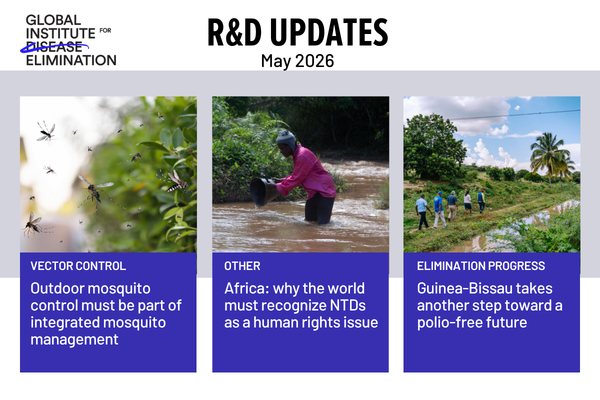
- Outdoor mosquito control must be part of integrated mosquito management – Link
- A systematic review comparing the performance of alternative blackfly (Simulium) trapping methods against the standard human landing catch (HLC) for onchocerciasis surveillance – Link
- Nationwide larval mosquito sampling in Cambodian households: Vector species in anthropogenic breeding sites – Link
- Ivermectin could help beat malaria, veterinary college researcher finds in running the numbers – Link
- Angola announces mosquito net factory to combat malaria – Link
Diagnostic testing and treatment
- How can the use of digital molecular diagnostic tools help to tackle malaria? – Link
AI and Innovations
- UK and France launch landmark biomedical and AI health alliance to accelerate research into major diseases – Link
- Strengthening public health intelligence through data analytics and artificial intelligence – Link
- Perception of artificial intelligence and machine learning applications in the Nigerian healthcare sector: A cross-sectional study – Link
- 79th session of the World Health Assembly (WHA79): Harmonization of regulatory approaches, governance, and standards for data, digital health, and artificial intelligence in the health sector – Link
Drug and vaccine development
- Flipping the script: Using mucosal immune obstacles to inform vaccine design – Link
Drug resistance
- Signature of resistance gene evolution and pyrethroid resistance escalation in the major malaria vector Anopheles funestus across Kenyan malaria-endemic regions separated by the Rift Valley – Link
Immunisation
- Global vaccination drive reaches 18·3 million children – Link
- From fear to protection: A father’s decision to protect his children with immunization – Link
- Pakistan launches week-long anti-polio drive in 79 ‘high-risk’ districts – Link
Surveillance
- Global approaches to infectious disease surveillance and modelling – Link
- Africa: APMEN’s flagship vector surveillance training connects a global community – Link
- CDC Operational guidance for investigating locally acquired mosquito-transmitted malaria — United States, 2026 – Link
- Togo begins post-elimination monitoring for Lymphatic Filariasis – Link
Elimination progress
- Sustaining malaria elimination requires a whole new approaches – Link
- A ray of hope in a divided world – Link
- PAHO and The Carter Center strengthen partnership to eliminate river blindness and other diseases in the Americas – Link
- Closing the final gaps: WHA discussions highlight the path to a polio-free world – Link
- Countries in the Horn of Africa and Yemen recommit to ending variant poliovirus – Link
- Polio eradication needs political commitment as conflict makes vaccination ‘impossible’ in areas like North Yemen – Link
- Guinea-Bissau takes another step toward a polio-free future – Link
Outbreak
- As a parent, you cannot relax”: a polio outbreak urges action across Malawi – Link
Climate and Health
- WHO launches the “Climate and Health Co-benefits Challenge” showcasing climate interventions saving lives – Link
- Unravelling the distribution of vectors of major vector-borne diseases in Koshi Province of Nepal: A concern of expansion in diverse geo-ecological and climatic regions – Link
- Tropical oceans drive variability in soil moisture and malaria in Malawi – Link
- Climate justice as a public health imperative: a perspective from Sierra Leone considering the 2025 International Court of Justice opinion – Link
- Climate change and Plasmodium vivax Malaria Risk in Brazil: Developing adaptive tool for Brazilian Municipalities – Link
- WHO should declare climate crisis a global public health emergency, experts say – Link
- Pan-European Commission on Climate and Health: recommendations for accelerating climate action for health – Link
- Climate change is a health crisis – and fixing it is a health opportunity – Link
- Uganda: Strengthening Uganda’s defences against climate-driven disease through data and partnerships – Link
- Declare climate crisis a global public health emergency, experts tell WHO – Link
- Climate change and social health – Link
Other
- Malaria parasite genomics: Decentralization, diversification, and development goals – Link
- Optimizing age-structured sampling for estimating the seroconversion rate in malaria seroepidemiology: a simulation study – Link
- Americas’ push to integrate traditional medicine into modern healthcare systems – Link
- From invisibility to political power: Policy lessons from a decade of Brazil’s Social Forum for Infectious and Neglected Diseases – Link
- Africa: why the world must recognize NTDs as a human rights issue – Link
- Funding resilience: NTD lessons in building stronger health systems – Link
- Evaluation of Global Health Days 2019-2023: Report – Link
- Strengthening frontline capacity for skin neglected tropical diseases: Findings from a global survey – Link
- High-level meeting reaffirms shared commitment to strengthen cross-border collaboration and accelerate elimination of malaria and neglected tropical diseases – Link
- Uganda: From funding pressure to sustaining impact – what we learned from the joint SMC Alliance and AMP Annual Meeting – Link
- 79th World Health Assembly adopts resolution to strengthen pharmacovigilance – Link
- Gilead and WHO expand infectious disease collaboration; Johnson & Johnson partners with Abu Dhabi for AI healthcare infrastructure – Link
- WHO and African Medicines Agency launch landmark framework to strengthen access to quality-assured health products in Africa – Link
- Restore funds for malaria, Africa urges – Link
- Building reparative futures demands a reckoning with the crisis form of global health – Link
- Turning the tide against malaria in high-burden African countries: Trends, threats, and solutions – Link
- 2026 Annual NTD Programme Managers Meeting – Link
- Venezuela identifies new mosquito capable of transmitting malaria in mining region – Link
- Strengthening frontline capacity for skin neglected tropical diseases: Findings from a
- global survey – Link
- Combating infectious diseases in a fragmented world – Link
- Nodding syndrome: The need to strengthen epilepsy care in onchocerciasis-endemic areas and to investigate the pathogenesis of onchocerciasis-associated epilepsy – Link
- Making research policy-ready: how institutions can support think tanks and SDG impact – Link
- Director-General presents award for global health to four distinguished leaders – Link
- World Health Assembly opens in Geneva, Switzerland – Link
- Approaches to quantifying acceptability of pharmaceutical interventions for neglected tropical diseases: A scoping review – Link
- Spatiotemporal trends of neglected tropical disease hospitalizations in Ecuador over 25-years from 2000 to 2024 – Link
- Anopheles ecology and serological evidence of malaria exposure in clinically malaria-free areas of Menoreh Hills Central Java, Indonesia – Link
- Genetic polymorphism of Plasmodium falciparum MSP-2 (3D7/IC) and multiplicity of infection in N’Djamena, Chad – Link
- Infants under 24 months with severe malaria have a serological profile of active infection with Epstein Barr Virus – Link
- Improving public health in health systems: guidance for country-level policies and actions – Link
- Measuring integrated delivery of essential public health functions: a review of health systems and health security monitoring tools – Link